
assisted_driving_technology_400.jpg

These 25 Advanced Driver Assistance Systems Help Make Cars Intelligent and Safer
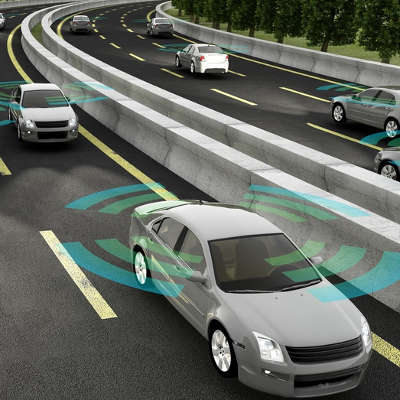
assisted_driving_technology_400.jpg

By now you’ve heard of self-driving cars insofar that you understand that there are engineers from all over the United States and abroad working with AI to develop systems that can create safer traffic conditions and cut down on emissions with efficiency. But what you may not know is that there are many drivers concerned at the development and deployment of these autonomous systems.

The Office for the Study of Automotive Transportation at the University of Michigan conducted a study that found that over one-third of all drivers are “very concerned” about riding in a self-driving car, while two-thirds of respondents are “very or moderately concerned”. It doesn’t seem as if the public is necessarily ready for this technology to be deployed; even though there are places where it has been shown to reduce traffic incidents substantially.

A car is many consumers’ “biggest” purchase, and with the car a person drives inexorably tied to their social status, people are not in a big rush to give up purchasing and driving cars without paying much mind for a car’s practical and safety information. With an autonomous vehicle, the driver’s role is now taken over by a computer, a completely terrifying prospect for some folks.

The reality is, however, that these cars are far and beyond more reliable than any human-driven car could possibly be. That’s because the human mind isn’t capable of the accuracy of these computing systems. Today what you see in lieu of full-on automated driving, are car manufacturers using some of the technologies developed for that purpose to improve the manual usage of the automobile. Marketed as advanced driver assistance systems (or ADAS), many newer cars offer some or all of the following options:

How many of these systems have you recognized on your family car?

These options have been slowly implemented as driver-assistance options. By using them incrementally rather than as part of a completely automated system it allows today’s drivers to avoid accidents while still getting the function out of their purchase.

One way that the automotive industry is currently taking advantage of ADAS technology is to have it assist drivers when needed. This is a much different approach than using it to fully automate the entire driving experience, and one that produces some confusion by drivers who are used to doing things a certain way behind the wheel.

Toyota’s “Guardian Angel” program is one example of a major car manufacturer working ADAS technology into a car to improve safety without negatively altering the driving experience. This program has the AI learn the driver’s habits as to give feedback while the car is being driven. Some ADAS options do take over the control of the car in times where motorists typically struggle with the goal to leverage the technology that’s available to improve safety and limit the amount of vehicular-related deaths (currently about 30,000 per year in the U.S.).

One caveat to successfully creating software that aids in the driving experience is that developers have to have an understanding of practical situations to interrupt a driver’s control of the vehicle. The CEO of Toyota Research Institute, Gil Pratt, went on to talk about this very subject to CIO magazine. “Your car may someday warn you several times about a particularly dangerous driving habit you have before taking control of the wheel. Autonomous driving capabilities are measured on a government scale of zero to four, with zero being no automation, and four being fully automated. The focus of most of the discussion among car makers today is how far up the scale they should go and how quickly. There’s a lot of discussion in the industry whether we go incrementally up the scale or whether we jump.”

It is important, especially with the public’s overwhelmingly negative perception of automobile automation, that these features are accurately assessing live situations. Up to 20 of the most visible car manufacturers have accepted this step-by-step approach to automobile automation as published by CIO, “The U.S. Department of Transportation’s National Highway Traffic Safety Administration (NHTSA) and the Insurance Institute for Highway Safety (IIHS) announced earlier this year that 20 automakers have pledged to make automatic emergency braking (AEB) standard on their cars by 2022.”

What are your thoughts? Are you willing to ride in a self-driving car? Can you trust your safety and that of your family to assisted-driving technology? Share your thoughts in the comments section below, and be sure to subscribe to our blog.

how_did_you_break_your_phone_400.jpg

Tip of the Week: The Top 5 Mistakes that Ruin Mobile Devices

how_did_you_break_your_phone_400.jpg

To get the most life out of your smartphone, you’re going to want to properly take care of it. Of course, this is easier said than done for a small device that’s prone to being dropped and subject to the many dangers of being transported. Here are five smartphone practices to avoid if you want your device to last.

Going Without a Case
When purchasing a mobile device, it’s easy to brush off getting a case. Although, if your device goes unprotected, then it can experience some serious damage when (not if) you next drop it. At the end of the day, protective cases are relatively inexpensive and can be easily found, so you really have no excuse… unless you’re this poor bloke.

Plus, if you’re super serious about protection, you can even special order a military-grade case that promises to safeguard your device from the harshest of conditions.

Exposing Your Device to Extreme Temperatures
Both extreme hot and cold weather can devastate a device. At 113 degrees Fahrenheit, a phone will overheat and become damaged, which is easy enough to reach inside a car on a hot summer day. On the opposite side of the thermometer, a smartphone ceases to work when the exterior temperature reaches -40° Fahrenheit. Just be mindful of this and turn your device off if you find yourself either in the desert, Arctic tundra, or even in direct sunlight.

Never Turning Off Your Device
Smartphones are different than PCs. With a PC, you can leave it on all day long without any adverse effects. In fact, some PC users will argue that it’s better to never turn off a PC. However, smartphones need to be turned off every now and then. TechRepublic explains:

At least once a week, reboot that device or (even better) shut it down for 30 minutes or so. Doing this will ensure that caches are cleared and subsystems are properly restarted. Shutting down the device once a week will aid with the longevity of the RAM on the device and allow certain diagnostics to be run at boot.

Keeping Your Phone in Your Pockets
While it certainly is convenient to keep your phone in the pockets of your pants, doing so puts your device at great risk. This is especially the case with your back pockets; forget to remove your phone and you’re in for one expensive sit. Even keeping your smartphone in the front pocket of your pants can cause it to fall out if you bend your legs a certain way. Plus, in some rare occasions, phone batteries have been known to combust.

Also, shirt pockets make for a bad place to store mobile devices. The reason should be obvious. Instead, it’s better to transport a mobile device on a belt clip, or even in a purse or messenger bag.

Ignoring Malware
For many users, mobile security solutions are ignored because they feel like their mobile devices aren’t susceptible to the same risks as PCs. While it’s true that more viruses are designed for desktops, there are many attacks exclusive to mobile platforms, and the number of threats continues to rise as mobile computing becomes ever more popular. At the very least, you should have an antivirus solution for your phone and perform regular scans, and you need to be careful of the mobile apps you install.

By avoiding these smartphone blunders, your phone should last for years to come, and the risk of something happening to it will decrease dramatically. For more tips and best practices, contact NuTech Services and subscribe to our blog.

b2ap3_thumbnail_auto_driving_cars_400.jpg

Ready or Not, Self-Driving Cars Will Soon Be On the Roads [VIDEO]
b2ap3_thumbnail_auto_driving_cars_400.jpgArtificial intelligence might be quite a ways off, but despite this, the push continues to make driverless cars a regular occurrence on the roads. Just look at how Google has its driverless cars rolling across testing grounds in Mountain View, California, and if they have their way, we might see a lot more of these vehicles hitting the roads in the near future.

According to the National Highway Traffic Safety Administration, Google’s self-driving vehicles can be considered a driver. According to ZDNet, Google wanted to clarify how their driverless cars could meet the Federal Motor Vehicle Safety Standards. In order for Google’s cars to be seen as compliant with the safety standards, all they had to do was change the position of the brake pedal and sensors, after which the vehicles were declared safe enough.

For examples of how one of these automated cars views its surroundings, watch this video:

This declaration is a huge step forward for the artificial intelligence development endeavor, but it presents an intriguing concept. Who’s to blame for an automobile accident stemming from the incompetence of a self-driving vehicle? You can’t necessarily sue a vehicle for causing an accident, unless you want to blame the manufacturer for creating a faulty product. But, what if the manufacturer simply blames the passenger because they failed to properly “set up” the vehicle? How would something like this work?

As you can probably expect, liability is a major concern for any autonomous process. With autonomous technology, though, this is a blurred grey line at best. As the feds claimed in their letter to Google, “If no human occupant of the vehicle can actually drive the vehicle, it is more reasonable to identify the ‘driver’ as whatever (as opposed to whoever) is doing the driving.” If something goes wrong, people want to find out who (or what) is at fault, and having vehicles capable of driving themselves makes it more difficult to do so.

Another huge issue is just how well Google’s autonomous cars fit into the current Federal Motor Vehicle Safety Standards. In particular, the regulations mention specific actions taken by human anatomy which describe how a motor vehicle should be controlled. As reported by WIRED:

The rule regarding the car’s braking system, for example, says it “shall be activated by means of a foot control.” The rules around headlights and turn signals refer to hands. NHTSA can easily change how it interprets those rules, but there’s no reasonable way to define Google’s software—capable as it is—as having body parts. All of which means, the feds “would need to commence a rulemaking to consider how FMVSS No. 135 [the rule governing braking] might be amended in response to ‘changed circumstances,’” the letter says. Getting an exemption to one of these rules is a long and difficult process, Walker Smith says. But “the regular rulemaking process is even more onerous.”

While liability will remain a major problem for autonomous cars, it’s still a significant step in the right direction. What this approval means is that computers can be considered humans, or at least human-like. This acknowledgement means that developers of artificially intelligent entities will have an easier time with their goals; yet, the process will still likely be filled with all sorts of legal maneuvers and such. Though Google has slated its automated cars to be available to the public by 2020, we might have to wait just a little bit longer, even for the most basic form of AI.

Would you trust an autonomous car to get you from point A to point B safely? Let us know in the comments!